
English| EUR
Suggested for you
More currencies
Choose a language
Every summer morning, small open boats pull away from St Ives Harbour and turn west toward a low granite outcrop where grey seals haul out on the rocks. Reading up on seal island st ives boat trips prices is usually the first step in planning that hour on the water. This guide sets out what the standard fare buys, when the boats run, and which part of the day gives the best odds of a busy colony.
Quick answer
A standard adult ticket for a one-hour Seal Island boat trip from St Ives is 30 GBP. Boats operate daily from 09:30 to 20:00, though sailings are weather-dependent and swell in the bay can shorten or cancel a departure at short notice. The recommended arrival window is 09:30 to 17:00, with early or late-afternoon trips giving the most active seal sightings.
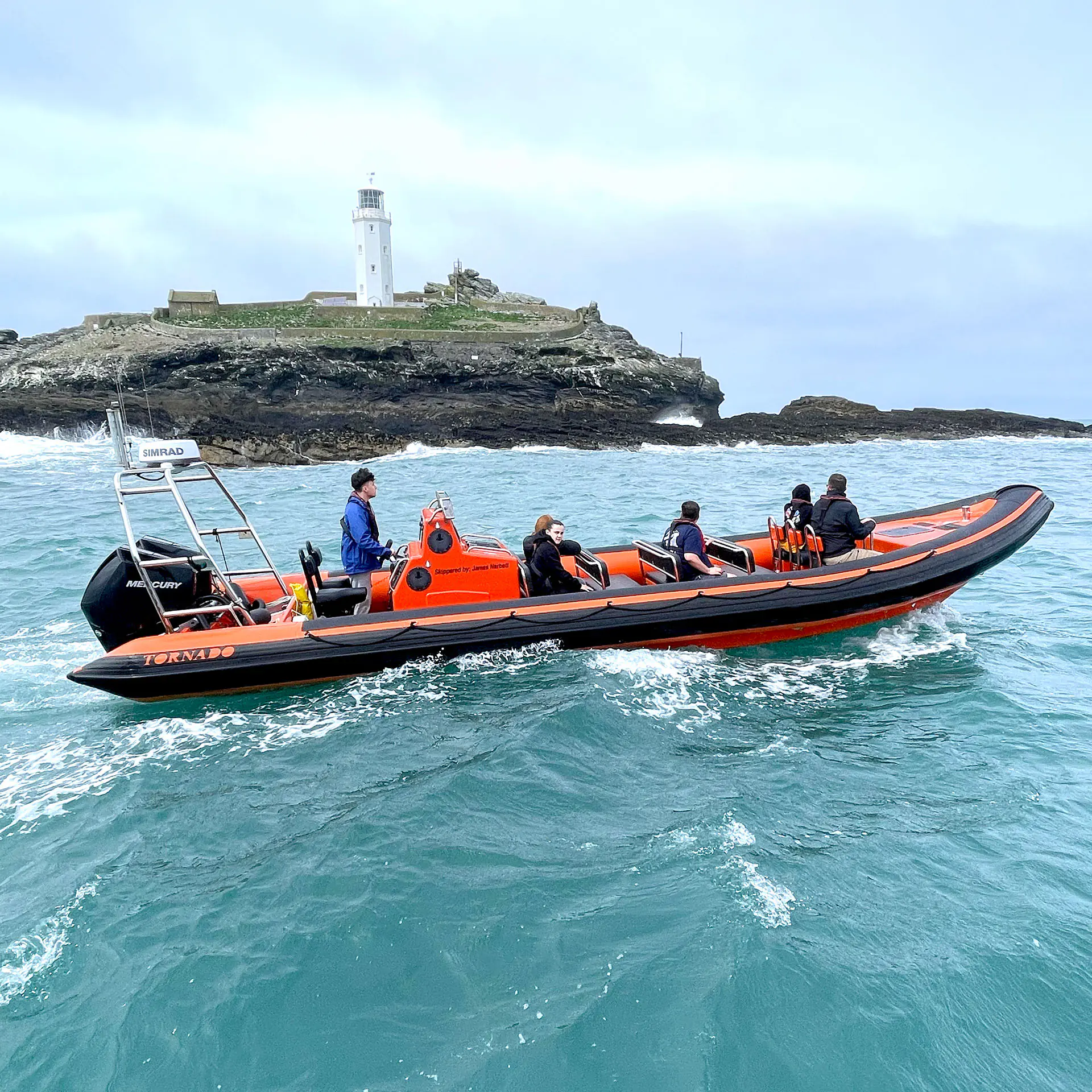
Seal Island is not really an island. It is a cluster of granite rocks off Carbis Bay known to charts as The Carracks, and the grey seals that give it its nickname are wild residents rather than a managed attraction — nobody feeds them, and nobody guarantees them. That single fact shapes almost everything a visitor needs to understand about seal island st ives boat trips prices: the fare buys a scheduled hour on the water with a licensed skipper, not a promised headcount of animals. The boats leave from St Ives Harbour, and the crossing runs west past Porthmeor Beach and the headland at Clodgy Point before reaching the colony. Most operators cut the engine on approach and hold position while the seals do what seals do — bask on the rock shelves, roll in the shallows, or bob up alongside the hull out of curiosity. Kittiwakes, cormorants and, in high summer, gannets working the bay are part of the same hour. Return trips are timed as a single continuous outing rather than a drop-off, so the boat that carries a visitor out is the boat that brings them back to the harbour slipway. Context matters when weighing what a St Ives seal island tour is worth. Tides and swell govern the schedule far more than the calendar does, and a settled morning in August can still produce a cancelled sailing if the wind swings onshore. Departures are not fixed to the minute; skippers sail when the boat fills and the sea allows, which is why the harbour blackboards are more reliable than any printed timetable. Seals themselves follow their own rhythm, hauling out to rest between feeding runs, so the difference between a rock with three animals and a rock with thirty is often a question of hours rather than luck. The practical takeaway is to treat the fare as the cost of a wildlife outing on a working stretch of the Cornish coast and to plan around the sea rather than the ticket. Anyone comparing seal island st ives boat trips prices across the harbour should look past the headline figure to the timing of the sailing, the size and type of vessel, and whether the weather is settled enough to sail at all. Booking ahead through the site's listings secures a slot on the busiest summer afternoons, and the detailed fare, schedule, timing and departure-point sections below cover the specifics.
“The fare buys a scheduled hour on the water with a licensed skipper, not a promised headcount of animals.”
Boat trips to Seal Island operate daily throughout the week, maintaining consistent opening hours to facilitate your travel planning.
The optimal arrival window for seal sightings is between 09:30 and 17:00, with early morning or late afternoon trips typically yielding the most active animal behavior. Planning your trip within these hours balances tidal conditions and peak wildlife activity.
Temperatures 12°C–18°C
Seals are often most active during the first trips of the day. Waters tend to be calmer, providing better visibility for wildlife spotting.
Temperatures 15°C–20°C
Expect higher demand during these hours. Animal activity may decrease as temperatures rise, making sightings less frequent.
Temperatures 14°C–19°C
Seal activity often increases again as the day cools. Fewer vessels on the water creates a quieter environment for observations.
Verdict: For the best experience, aim to arrive between 09:30 and 17:00, specifically targeting early morning or late afternoon departures for maximum seal activity.
Boat trips to Seal Island depart from St Ives Harbour, located in the heart of the town at TR26 1LH. Visitors should make their way to the harbour front to meet the departure point.
Great Western Railway to St Ives station
A17/A17A to St Ives Malakoff Bus Station
A30 to A3074 into St Ives
Follow signs for St Ives Harbour
Parking in St Ives is limited, so allow extra time to walk from outlying car parks such as St Ives Station or Park Avenue to the harbour. For specific logistics or inquiries, please contact the operator at +44 7888 213131.
A short run of preparation, ordered from the weeks before your trip down to the moment you reach the harbour, keeps a Seal Island sailing straightforward.
Everything you need to know about seal island st ives boat trips prices
The standard adult ticket price for a 1-hour boat trip is 30 GBP. Please check our booking portal for availability on your preferred date.
Advance booking is highly recommended to secure your place on the water, as capacity is limited. You can manage your reservation directly through our official site.
Each standard excursion lasts approximately 1 hour, providing time to observe the Atlantic grey seals in their natural habitat. The boat departs directly from St Ives Harbour.
Yes, children are welcome to join these trips when accompanied by an adult. Please ensure you select the appropriate passenger count during the booking process.
We suggest choosing a trip between 09:30 and 17:00, as early or late afternoon excursions often provide the most active seal sightings. This timeframe allows for the best photography opportunities along the Cornwall coastline.
The departure point is located at St Ives Harbour, St Ives, Cornwall, TR26 1LH. Detailed instructions for reaching the harbour are provided upon confirmation of your booking.
The advertised fee covers the standard 1-hour boat trip experience. Please note that all sailings are subject to sea and weather conditions for passenger safety.